
2025
Le Volume 53, numéro 2 (2025) de la Revue d’Études Autochtones, intitulé « Cartographies autochtones ». Sous la direction de Benoit Éthier, Justine Gagnon et Christian Coocoo, ce numéro explore les multiples manières dont les peuples autochtones tracent, racontent et réinventent leurs territoires à travers des perspectives à la fois artistiques, politiques et cosmologiques. La couverture présente l’œuvre Truth on the Land, New Life, New Beginning(2023), une acrylique sur bois (51 × 41 cm) du peintre Wayne McKenzie, qui incarne visuellement les thèmes au cœur de ce dossier.
Collaborateurs et collaboratrices :
Nathalie Awashish, Hélène Boivin, Sonia Chachai , Jake Chatfield , Charles Coocoo, Christian Coocoo, Caroline Desbiens, Louis-Jacques Dorais, Marie-Eve Drouin-Gagné, Benoit Éthier, Debby Flamand, Stéphane Guimont Marceau, Irène Hirt, Ejinagosi (Richard) Kistabish, Oscar Kistabish, Antoine Laugrand, Frédéric Laugrand, Michel Nepton, Adam Nye, Sherrie Nye McCarron, Tayla Nye, Adam McCarron, Sylvie Poirier, Kim Spurway , Daviken Studnicki-Gizbert, Annick Thomassin, Guy Tremblay
Pour plus d’informations : https://recherches-autochtones.org/site/produit/cartographies-autochtones-2025-vol-53-no-2-pdf/
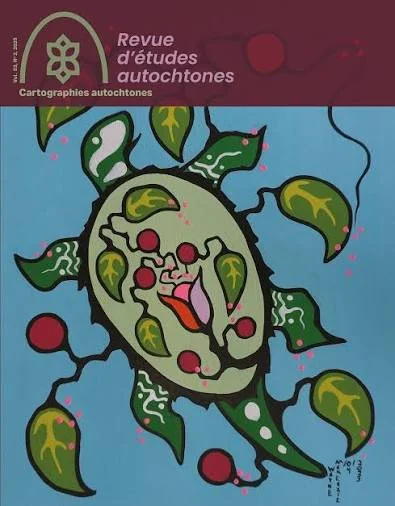
The book Territories of Life: Equivocations, Entanglements, and Endurances, edited by Mario Blaser, Sylvie Poirier, and Penelope Anthias, is scheduled for release on 18 November 2025.
SUMMARY
Contributors to this book explore the diverse ways Indigenous and other collectives strive to sustain their unique territories of life under the heavy shadow of modernization and coloniality. They emphasize that these struggles involve not only humans but also more-than-human collectives. To portray the complexity of the relations between these collectives and the forces of modernization, the volume is structured around three keywords: equivocation, entanglement, and endurance. Each of its ten chapters draws on extensive ethnographic research conducted in various countries, including those colonially known as Australia, Bolivia, Canada, Colombia, Paraguay, and Taiwan. Territories of Life offers a framework to discuss the challenges and possibilities that exist for the continuation of territories of life that have endured, for the renewal of those that have been severely damaged, and for the creation of those that must flourish to sustain diverse modes of existence.
CONTRIBUTORS
Penelope Anthias, Jacinta Baragud, Mario Blaser, Yamila M. Gutierrez Callisaya, Benoit Éthier, Sipi Flamand, Hernán Ruiz Fournier, Sarah C. Moritz, Adam Nye, Sylvie Poirier, Lorna Quiroga, Qwalqwalten, Christina Rojas, Scott E. Simon, Kim Spurway, Annick Thomassin, Carolina Tytelman, and Paul Wattez.
ABOUT THE EDITORS
Mario Blaser is Professor at Memorial University. Sylvie Poirier is Professor in the Department of Anthropology at Université Laval. Penelope Anthias is Associate Professor at Durham University.
2024
2023
2022
Publication : Biocultural Rights, Indigenous Peoples and Local Communities Protecting Culture and the Environment
Dirigé par Fabien Girard, Ingrid Hall et Christine Frison
Contributions : Fabien Girard, Ingrid Hall, Christine Frison, Kelly Bannister, Garrett Graddy-Lovelace, Giulia Sajeva, Pía Marchegiani, Louisa Parks, Miri (Margaret) Raven, Daniel Robinson, Leslé Jansen, Rayna Sutherland, Manohisoa Rakotondrabe, Reia Anquet
Résumé : This volume presents a comprehensive overview of biocultural rights, examining how we can promote the role of indigenous peoples and local communities as environmental stewards and how we can ensure that their ways of life are protected. With Biocultural Community Protocols (BCPs) or Community Protocols (CPs) being increasingly seen as a powerful way of tackling this immense challenge, this book investigates these new instruments and considers the lessons that can be learnt about the situation of indigenous peoples and local communities. It opens with theoretical insights which provide the reader with foundational concepts such as biocultural diversity, biocultural rights and community rule-making. In Part Two, the book moves on to community protocols within the Access Benefit Sharing (ABS) context, while taking a glimpse into the nature and role of community protocols beyond issues of access to genetic resources and traditional knowledge. A thorough review of specific cases drawn from field-based research around the world is presented in this part. Comprehensive chapters also explore the negotiation process and raise stimulating questions about the role of international brokers and organizations and the way they can use BCPs/CPs as disciplinary tools for national and regional planning or to serve powerful institutional interests. Finally, the third part of the book considers whether BCPs/CPs, notably through their emphasis on "stewardship of nature" and "tradition", can be seen as problematic arrangements that constrain indigenous peoples within the Western imagination, without any hope of them reconstructing their identities according to their own visions, or whether they can be seen as political tools and representational strategies used by indigenous peoples in their struggle for greater rights to their land, territories and resources, and for more political space. This volume will be of great interest to students and scholars of environmental law, indigenous peoples, biodiversity conservation and environmental anthropology. It will also be of great use to professionals and policymakers involved in environmental management and the protection of indigenous rights.

2021
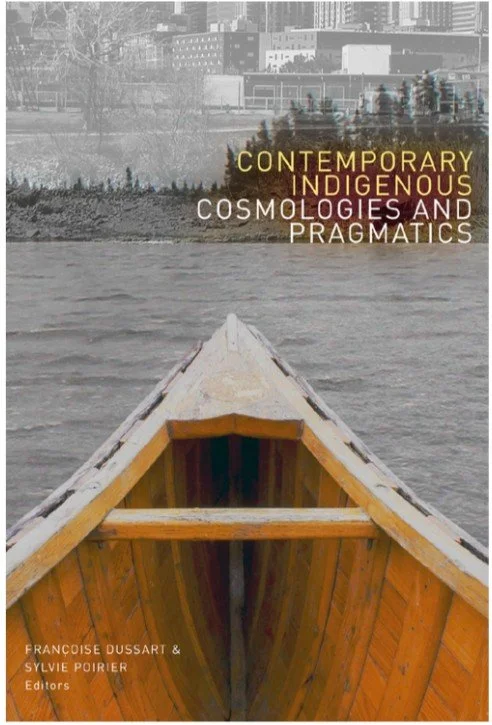
Publication : Contemporary Indigenous Cosmologies and Pragmatics
Edité par Françoise Dussart et Sylvie Poirier
Contributions : Anne-Marie Colpron, Robert R. Crépeau, Françoise Dussart, Ingrid Hall, Laurent Jérôme, Frédéric Laugrand, C. James MacKenzie, Caroline Nepton Hotte, Ksenia Pimenova, Sylvie Poirier, Kathryn Rountree, Antonella Tassinari, Petronella Vaarzon-Morel
Nous avons le plaisir d’annoncer la sortie de l’ouvrage Contemporary Indigenous Cosmologies and Pragmatics édité par Françoise Dussart et Sylvie Poirier publié aux Presses de l’Université d’Alberta.
« In this timely collection, the authors examine Indigenous peoples’ negotiations with different cosmologies in a globalized world. Dussart and Poirier outline a sophisticated theory of change that accounts for the complexity of Indigenous peoples’ engagement with Christianity and other cosmologies, their own colonial experiences, as well as their ongoing relationships to place and kin. The contributors offer fine-grained ethnographic studies that highlight the complex and pragmatic ways in which Indigenous peoples enact their cosmologies and articulate their identity as forms of affirmation. This collection is a major contribution to the anthropology of religion, religious studies, and Indigenous studies worldwide. »
Contributions : Anne-Marie Colpron, Robert R. Crépeau, Françoise Dussart, Ingrid Hall, Laurent Jérôme, Frédéric Laugrand, C. James MacKenzie, Caroline Nepton Hotte, Ksenia Pimenova, Sylvie Poirier, Kathryn Rountree, Antonella Tassinari, Petronella Vaarzon-Morel.
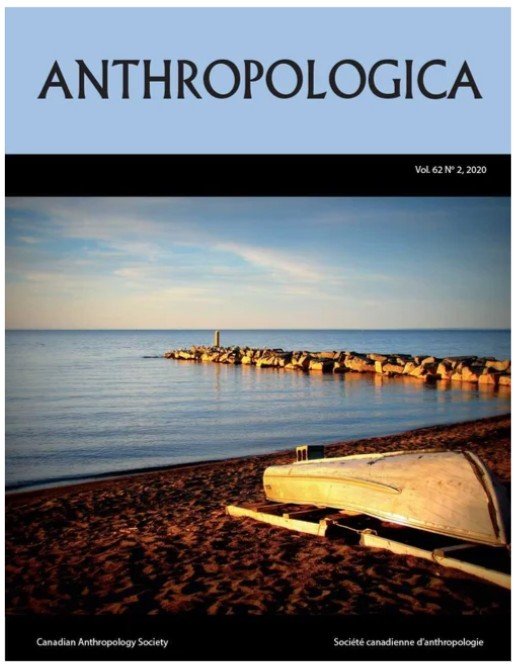
Parution du numéro : “Traités: Vivre ensemble avec la terre / Treaties : Living Together with the land”
Anthropologica, Vol. 62, No. 2, 2020
Sous la direction de Sylvie Poirier et Clinton Westman
Contributions : Sylvie Poirier, Clinton Westman, Colin H Scott, Benoit Éthier, Gérald Ottawa, Christian Coocoo, Şükran Tipi, Hélène Boivin, Brian Thom, Michael Asch
2020
Parution de Ruser, tricher et tromper (2020)
Par Frédéric Laugrand, Pierre-Joseph Laurent et Lionel Simon
Contributions : Frédéric Laugrand, Pierre-Joseph Laurent, Lionel Simon, Laure Carbonnel, Sarah Bourdages-Duclot, Antoine Laugrand, Laurent Jérôme
Ce numéro, tant par le thème abordé, que par la méthode utilisée pour en rendre compte, témoigne d’une anthropologie ouverte, non dogmatique, mais soucieuse de préserver son identité scientifique et attentive à ne pas verser dans les pièges idéologiques qui lui sont aujourd’hui tendus. En effet, nous assistons, depuis une vingtaine d’années, à une offensive, venue principalement de certains campus nord-américains, qui prétend, au nom de la morale et d’une conception communautariste et relativiste de la société et de la culture, dicter ses injonctions à l’anthropologie. Rappelons ici que le savoir anthropologique, quoi qu’on dise et quoi qu’on fasse, répond, depuis ses commencements à quelques critères qui l’identifient comme science de la culture par excellence : 1) définir avec précision son objet d’étude ; 2) le distinguer des excès subjectivistes de l’enquêteur engagé, tout en luttant contre les préjugés dont l’ethnographe est nécessairement porteur ; 3) enquêter en respectant la double méthode de l’entretien et de l’observation participante qui exige le temps long, la connaissance des langues locales, la distanciation (non contradictoire avec l’observation participante) et la variation des points de vue ; 4) enfin, éviter de confondre les jugements de valeur et les jugements de réalité en faisant passer les premiers pour les seconds, ce qui n’empêche nullement d’adopter un comportement respectueux à l’égard de ceux que l’on côtoie sur le terrain. Cela implique de décrire ce que l’on voit et entend, puis de tenter de généraliser après un exercice comparatif, sans verser ni dans le subjectivisme ni dans le positivisme. Ce numéro met bien en évidence la rigueur avec laquelle l’anthropologue peut traiter tout objet digne de l’être sans tomber dans le moralisme sectaire. Surtout, s’il s’agit de ruse, soyons francs ! L’anthropologie ne se limite pas à la dénonciation constante du pouvoir dont les sujets sociaux seraient les marionnettes plus ou moins consentantes (les « idiots utiles » pour reprendre un terme à la mode). Notre but est bien de comprendre le sens des actions humaines en contexte, qu’elles soient sincères ou non.
Parution du numéro : Tintamarre et Bulalakaw : parer au Covid par le rituel
par Frédéric LAUGRAND
“La gestion de la crise sanitaire du Covid-19 en Europe peut elle-aussi se lire comme un vaste rite occasionnel dont les séquences se télescopent. L’africaniste Luc de Heusch, l’un des plus grands anthropologues belges du XXe siècle, définissait les rites comme « un projet d’ordre pour défendre ou restaurer l’être dégradé, accroître son potentiel vital ou, inversement, détruire l’être-de-l’autre ». Il proposait de distinguer trois types d’action : des rites cycliques de l’ordre de la structure (les fêtes de Noël, par exemple) ; des rites de passage ou transitifs liés à un temps irréversible (comme l’initiation des jeunes ou les anniversaires) ; et des rites occasionnels qui offrent une parade aux dérèglements historiques de l’ordre collectif et cyclique. Avec la crise du Covid-19, ces derniers ont le vent en poupe. Ils s’observent dans plusieurs régions de la planète.“
Anthropologue, Presses de l’Université de Grenoble, Le virus de la recherche, juin 2020
cArgo #10
Frédéric Laugrand
Pierre-Joseph Laurent
Lionel Simon

Natacha Gagné
2020
À la reconquête de la souveraineté : mouvements autochtones en Amérique latine et en Océanie
Collection Mondes Autochtones, Presses Université Laval
Martin Hébert, Stéphanie Rousseau, Natacha Gagné, Marie Salaün, Ignacio Ochoa, Lucas Aguenier, Hernan Manrique, Raphaël Colliaux, Pascal-Olivier Pereira de Grandmont, Eric Gagnon-Poulin, Ève Desroches-Maheux, Marie-Ève Paquet, Catherine Charest, Catherine Pellini
2019
Laurent Jérôme
Éric Chalifoux
Marie-Pierre Bousquet
2019
Imaginaires, territoires et marginalisation
Recherches Amérindiennes au Québec, Vol. 49, N. 3
Gaëlle André-Lescop, Gabriel Arsenault, Danny Baril, Pierre Beaucage, Jean-François Bissonnette, Denis Blouin, Marie-Pierre Bousquet, Luc Bouthillier, Éric Chalifoux, Julie Cunningham, Caroline Desruisseaux, Émile Duchesne, Paul-André Dubois, Gérard Duhaime, Philippe Erikson, Marie-Charlotte Franco, Laurent Jérôme, Erika López Salgado, Ezequiel Mora Guzman, Xanath Rojas Mora, Arnaud Simard-Émond, Isabelle St-Amand, Taller de Tradición Oral Totamachilis, Guillermo Alfonso Woolrich Piña
Marie-Pierre Bousquet
Karl S Hele
2019
La Blessure qui dormait à poings fermés
Collection “Signes des Amériques”, Recherches Amérindiennes au Québec
Alexandra Beaulieu, Marie-Pierre Bousquet, Brieg Capitaine, Paul Charest, Emanuelle Dufour, Karl S. Hele, Mylène Jubinville, Maurice J. Kistabish, Francis Lévesque, Joel Montanez, Jean Morisset, Marcel Petiquay, Audrey Pinsonneault, Anne-Marie Reynaud, Thierry Rodon, Jean-François Roussel, Jocelyne Thomé et Karine Vanthuyne
2018
Laurent Jérôme
Sylvie Poirier
2018
Frontières, Vol. 29, N.2
Laugrand Frédéric, Poirier Sylvie, Crépeau Robert R., Rosa Rogério Reus Gonçalves da, Pilco Enrique, Hall Ingrid, Goulet Jean-Guy A., De Lacroix Pricile, Jérôme Laurent, Biroté Christiane, Coocoo Jeannette, Bousquet Marie-Pierre, Paradis Louise I., Coocoo Christian
2017
Françoise Dussart
Sylvie Poirier
2017
Entangled Territorialities: Negotiating Indigenous Lands in Australia and Canada
University of Toronto Press
John Borrows, Françoise Dussart, Sylvie Poirier, Harvey A. Feit, Colin H Scott, Frances Morphy, Elodie Fache, Clinton Westman, Brian Thom, Sachiko Kubota, Petronella Vaarzon-Morel, Nicolas Peterson, Michael Asch
2015
Présentation de Liaisons animales: Questions d’affect, Anthropologie et Sociétés, 39 1-2, 2015
Par Frédéric Laugrand
2012
Marie-Pierre Bousquet
Robert Crépeau
2012
Dynamiques religieuses des autochtones des Amériques.
KARTHALA Editions
Marie-Pierre Bousquet, Robert Crépeau, Jean-Guy Goulet, Sophie Lemoyne-Dessaint, Flavio Braune Wiik, Frédéric Laugrand, Jarich Oosten, Claude Gélinas, Jean-François Vachon, Louise Paradis, Jimena Marquez, Esther Jean Langdon, Isabel Santana de Rose, Anny Morissette, Laurent Jérôme, Clinton Westman, Anne-Marie Colpron, Aldo Litaiff.